BLOG
Collesano is a village of 3,000 people in the Madonie mountains of Sicily. My family has been there for seven generations. I grew up in Switzerland — Orbe, then Lausanne, Zurich, Locarno — and for most of my life, Sicily was something I came back to in summer. A place of origin. Not a place of future.
That changed.
I'm not sure I can pinpoint the exact moment. It was more of an accumulation — of questions about what I was building, and for whom. I design light for theatre and dance. I've spent my life creating environments where something can happen. And at some point I started asking: what if the environment itself were the project?
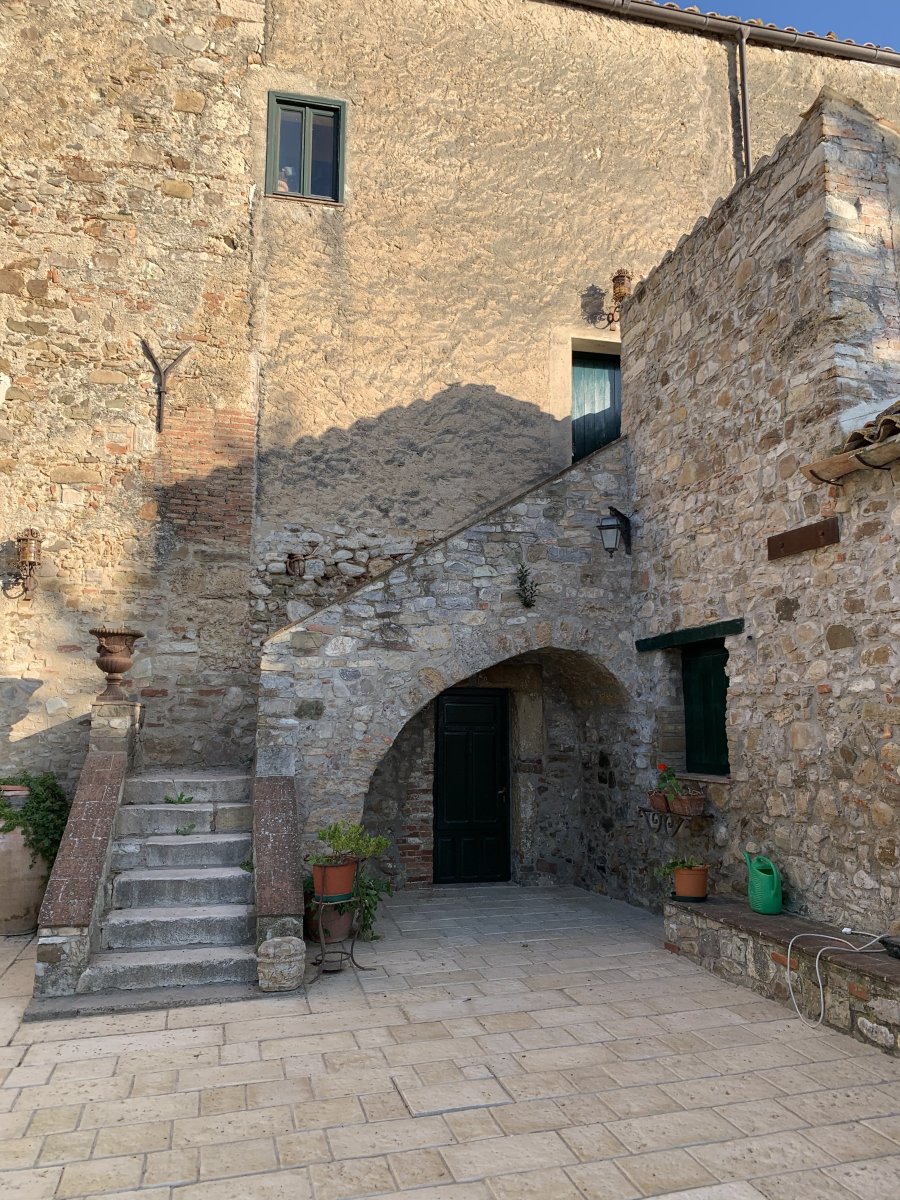
Forty hectares of land. Untouched for decades. Springs. Stone farmhouses. Ancient terraces carved into the hillside by people whose names I don't know but whose work I walk on.
Kaspa Camp is my answer to that question.
Not a festival. Not a retreat. Something slower and more ambitious than that — a place where artists can work, where children can learn by doing, where a local economy can be built from the ground up.
I don't know exactly what it will become.
That's the point. — Rosario
The People Already in the Room
Every project begins with a conversation. Kaspa Camp began with several — and some of them have been going on for years.
Before a single stone is moved or a single token is launched, there is already a network of people who have committed their time, their expertise, and their trust to this project. I want to name them here, because a project is only as real as the people behind it.
Riccardo Lisi is an art curator based at La Fabbrica in Locarno, Switzerland — a cultural space that has become the northern node of the Kaspa Camp project. Riccardo has been a friend for years and is now an active coordinator: writing proposals, connecting partners, and leading the Cultura Piccoli Comuni funding application that must be submitted by 31 August 2026.
Giovanni Gilgen is a land artist from Curio, in Ticino. His 280F Tunnel Vertebrale — a 28-metre walkable sculpture composed of iron, paper, jute, and mineral plaster — will be the inaugural installation at Collesano. Giovanni's Officine 280F model, in which people in situations of social fragility participate directly in the creation of the work, is a template for how we want to produce art at Kaspa Camp: not for the public, but with it.
Anne Bauer, from eigenleben LIFE Genossenschaft in Bolzano and Munich, is preparing the launch of an Italian non-profit association (ETS) in September 2026 — the legal structure that will allow the project to access Italian cultural funding and formalise partnerships. https://www.eigenleben.life
Adrian Corry, connected to the Royal College of Art in London, brings international cultural credibility and a network that extends well beyond the Alps and the Mediterranean.
Movimento la Quercia is the active environmental group in Collesano — our most important local partner for community legitimacy, land use, and sustainability.
Actors from Teatro Dimitri, the historic Swiss theatre school in Verscio, opens the residency programme to performing arts, movement, and outdoor performance.
And the Comune di Collesano — with Mayor Tiziana Cascio and culture officer Elsa Ingrao — is the institutional partner without whom none of the public funding is accessible.
This is who is already in the room. If you think you belong here too: info@kaspacamp.org
— Rosario
Who We're Looking For
Kaspa Camp is not a solo project. It never was.
The land is there. The vision is clear. What makes it real is the people who come to build it with us.
We are actively looking for collaborators across several areas:
ARTISTS AND RESEARCHERS We are opening the first residency season in Collesano. Artists who work with land, space, community, or technology are welcome. The first confirmed collaboration is with Giovanni Gilgen — land artist from Ticino — whose 280F Tunnel Vertebrale installation will be the first permanent work on the site: a 28-metre walkable sculpture of iron, paper, and mineral plaster.
EDUCATORS AND FACILITATORS Hands-on programmes for children and young people are at the core of the Bloom project. We are looking for educators, facilitators, and youth organisations from Europe and beyond who want to experiment with learning outside traditional structures.
INSTITUTIONS AND CULTURAL ORGANISATIONS Kaspa Camp is building partnerships with Comune di Collesano, and is preparing applications to Creative Europe and the Italian Ministry of Culture. We welcome institutional partners who share our approach to rural regeneration and cultural development.
MAKERS, BUILDERS, TECHNOLOGISTS The camp needs people who know how to build things — physically and digitally. From sustainable architecture to blockchain infrastructure, we are interested in people who work with their hands and their minds.
ANYONE WHO BELIEVES REAL PLACES MATTER Ultimately, what we need most is people who understand why this kind of project exists — and who want to be part of it before it becomes obvious.
If any of this resonates: info@kaspacamp.org
— Rosario
🌱 Blog
“In a forest, there are no outskirts.”
Ubuntu: I am because we are.
— Giacomo Bianchi
In the etymology of the word curiosity lies the word care.
“Before access to books became widespread, the most important room was the one used for hosting.
All information necessary for survival passed through people, and knowing how to host them was the only way to obtain it.”
— Latin class, 4th year of high school
In the etymology of the word hospitality lies the word hostile.
— G. Derrida
Ubuntu: I am because we are.
— Bantu philosophy
This space will progressively host notes, reflections, and field observations.